
Home Time grew out of lockdown, but it never felt like a solitary project. If anything, that strange period made me more productive than ever — helped along by the generosity of people like Hainbach, Jamie Lidell, Paul Koch and the whole Ableton Loop at Home community. What started as a way to stay creative became a surprisingly collaborative journey, even when everyone was stuck indoors. Join me as I break down the album track by track.
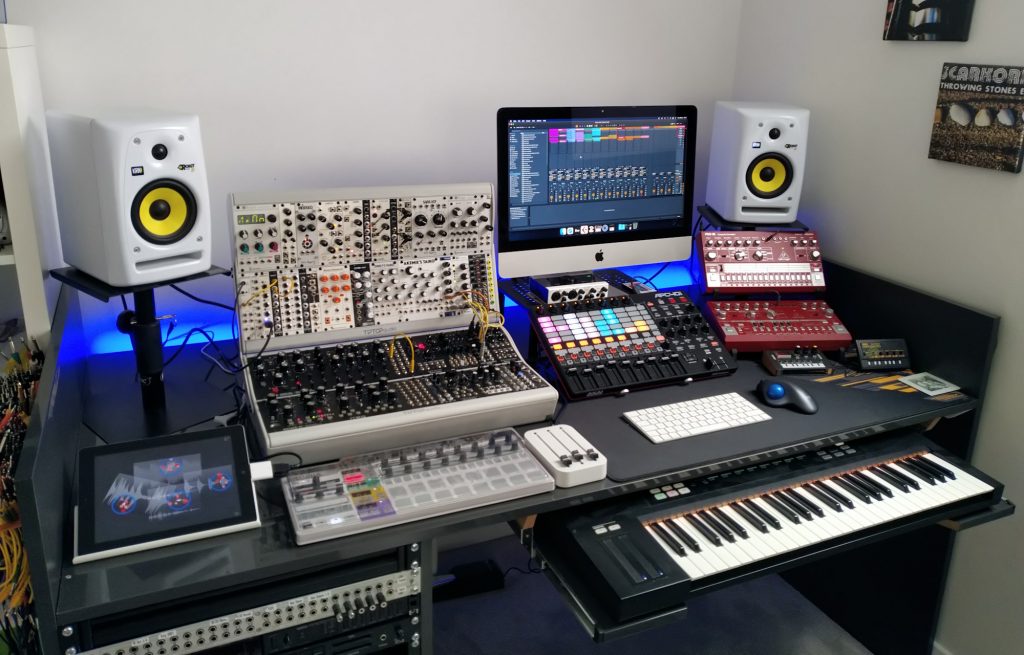
Track 1 – Radio Poland Calling
“Radio Poland Calling” was born from Ableton’s #LoopAtHome – a three‑day online event built around shared challenges and collective creativity. The brief for day two was to make a track using only sounds provided from the Polish Radio Experimental Studio archive, or PRES for short.
PRES are similar in many ways to the UK’s Radiophonics Workshop and the sound pack Ableton supplied was a treasure trove of weird and wonderful noises. As a new piece of music started to emerge from my experimentation, it became clear that things were moving in a dark, down-tempo direction.
What surprised me was even with the constraints around the source material, the end result is still very much a ScarKord track. The challenge forced me to approach sound in a different way, but the musical identity that came out the other side was unmistakably mine.
Track 2 – Radio Poland Returns
Revisiting “Radio Poland Calling” in late 2025, I was struck by how short it was. It was tempting to stretch it out, add new sections, and turn it into something more expansive. But the more I listened, the more it felt like those fragments could become something new rather than something longer.
So instead of building an extended version, I approached it as a companion piece: a chance to explore the same source material from a different angle. The result is “Radio Poland Returns”.
Track 3 – Gizmophone
“Gizmophone” came out of day one of Ableton’s #LoopAtHome challenge, which asked participants to build and record their own homemade instrument. The final “instrument” was made from whatever I could scavenge: an offcut of windowsill, a metal Ikea table leg, and a length of old wire I found at the end of the garden. A piezo mic was incorporated for good measure, but only behaved for short percussive hits thanks to a generous helping of background hum.
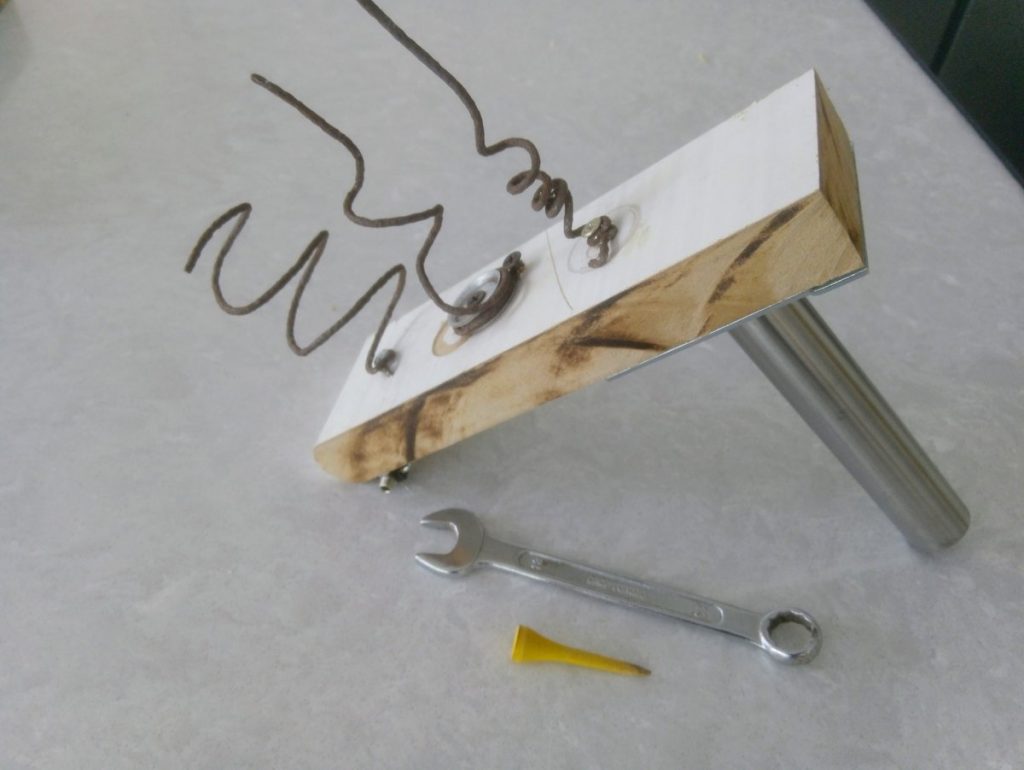
Despite the ramshackle setup, some of the sounds were surprisingly usable. The real star was the Ikea leg, which produced a bright, bell‑like tone when struck with a spanner. I created a patch using Ableton’s Sampler, tuned it, duplicated it with slightly different filter settings before panning each version slightly left and right. Swirling and scraping the spanner inside the wire springs gave me a wonderfully gritty rhythmic texture, which I layered behind the main percussion sounds. With a touch of Ableton’s Corpus effect, some careful warp‑marker editing, plus a bit of Beat Repeat for movement, the whole thing started to feel like a proper instrument rather than a pile of garden scrap.
For Home Time, I revisited the original sketch in late 2025 and decided to take it further. I added a darker B‑section inspired by classic Orbital — deeper, more atmospheric, and a little more ominous. It gave the piece a sense of journey, turning a playful DIY experiment into something with weight and contrast.
Track 4 – Isolation Loop Samba
This was the moment I finally found time to sit down and write something new during lockdown, and the Isolation Loop packs kindly shared by Hainbach and Jamie Lidell were the perfect inspiration. “Isolation Loop Samba” forms one half of a pair — its sibling, Isolation Loop Waltz, appears later on the album. Where the waltz leans into a drifting, lo‑fi 3/4 feel, this piece takes the same raw ingredients and pushes them toward something more rhythmic and syncopated.
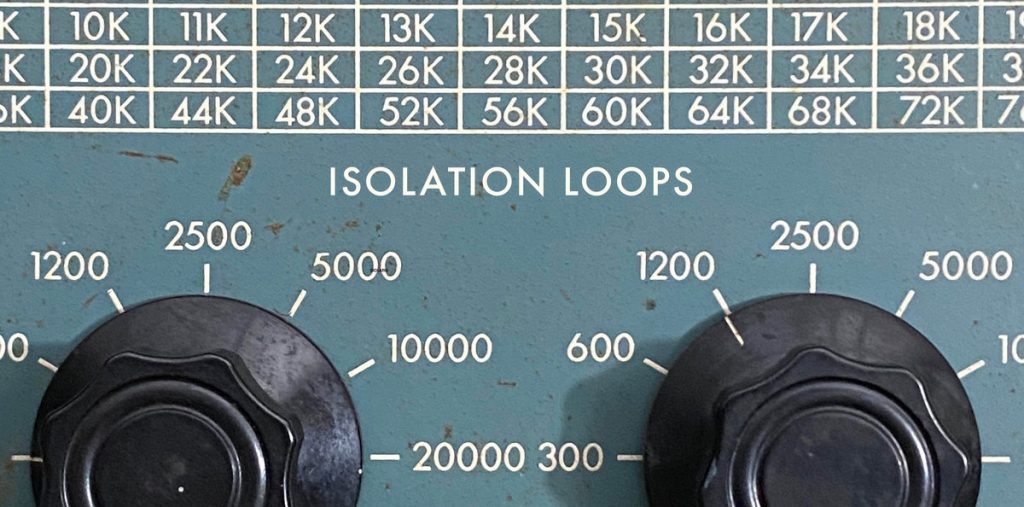
The starting point was Jamie’s vocal elements which were chopped into percussive accents, underpinned by Hainbach’s tape‑worn textures. The “samba” in the title isn’t a strict genre reference — more a playful nod to the gentle, off‑kilter groove that emerged as the layers settled into place, especially once extra percussion came in and the track grew livelier, almost celebratory.
Track 5 – Out From The Cold
“Out from the Cold” is a special one for me — it’s when I realised I’d genuinely broken through the writer’s block that had been hanging over me for years. It’s one of those rare tracks where everything suddenly clicks, and you feel that spark again, the one that reminds you why you make music in the first place.
The piece began on day three of Ableton’s #LoopAtHome, which set perhaps the strangest challenge of the whole weekend: follow a list of instructions and trust that something musical would eventually emerge.
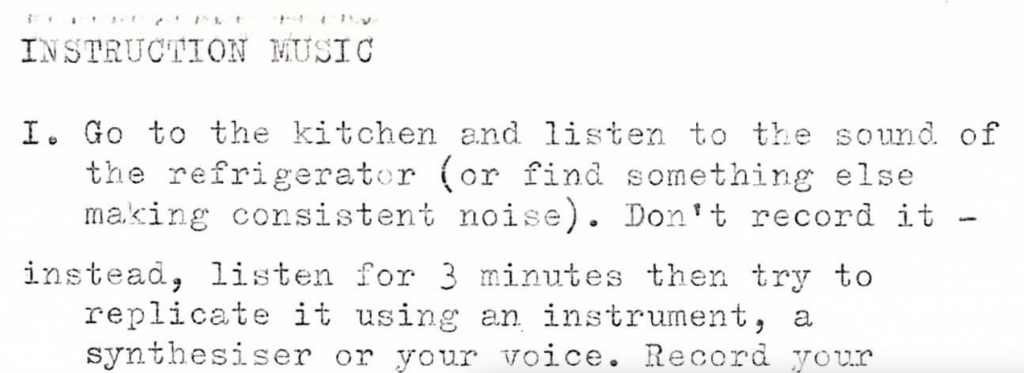
The very first line read, “Go to the kitchen and listen to the sound of the refrigerator…” — not exactly the most promising start. Our fridge was far too quiet to be useful, so I ended up turning to the freezer instead. After failing to synthesise its hum, I resorted to doing an impression of it, which turned out to be a blessing in disguise; that vocal imitation became the raw material for the melody.

By step three, I was close to giving up. The instructions had me sampling a can of beer, a glass, and a handful of Graze snacks — hardly the ingredients of a future favourite track. But once I committed to the process, things began to take shape. The ring‑pull became percussion, the fizz of the can turned into hi‑hats, and the handle of the beer glass produced a surprisingly beautiful bell‑like tone. Slamming the empty glass on the desk gave me the kick drum.
With a beat in place, I returned to the humming sound and coaxed out a set of beautiful glassy, melodic tones from my voice. For the interweaving lines, I played the same progression three times — each an octave higher and at an increasing tempo — creating a sense of lift and momentum that felt almost euphoric.
When I finally played the finished track back, it gave me goosebumps. After years of feeling stuck, this was the moment I knew I had something worth sharing again. “Out from the Cold” isn’t just a track; it’s the sound of finding my way back.
Track 6 – Swarms
“Swarms” was one of the first pieces I wrote in early 2021, created as a way of taking Ableton Live 11 for its inaugural spin. It also marked my first encounter with Paul Koch’s Swarmitar– a Kontakt instrument inspired by the bendy, unstable character of the Swarmatron, blended with the kind of ebowed‑guitar ambience you might associate with Nine Inch Nails.
The opening gated noise is an instance Swarmitar pushed through Cableguys ShaperBox, creating a pulsing, restless rhythm. From there, a beatbox pattern and Swarmitar’s dreamlike pads take over, forming a bed on which the whole piece sits. There’s something wonderfully cinematic about the way Swarmitar shifts and bends — always slightly on the edge of control, always alive — and it gave the track a real sense of movement.
In the second half, I brought in the Spitfire Audio upright piano and string quartet libraries. The piano is drenched in Valhalla Shimmer Reverb, but rather than dissolving into an ambient wash, it stays melodic — eerie, glowing, and slightly otherworldly, as if the reverb is stretching the notes into ghostly reflections of themselves. The strings add warmth and weight, grounding the more volatile Swarmitar textures and giving the track a sense of lift as it unfolds.
Track 7 – Isolation Loop Waltz
“Isolation Loop Waltz” was built around another of Hainbach’s atmospheric piano tape loops which I manipulated in Ableton and stumbled across a lovely chord sequence that felt both melancholic and uplifting. Whilst I could easily have employed time-stretching to make the timing more uniform, much of the wonky charm came from the samples being sped up and down.
Jamie’s vocal “ahh” samples were reshaped to create a gentle lead sound which provides the melody line. It’s doubled up with a glassy, FM synth patch as well which helps it cut through a little better.
The drums are a combination of noises from the Hainbach Test Equipment loops, hi-hats extracted from one of Jamie’s drum loops, some electronic drum sounds courtesy of Daniel Miller’s ARP2600 and a few sounds created on my own Eurorack modular system. The buzzy bass note is also from one of the Hainbach Test Equipment loops. I deliberately avoided using a metronome or any quantizing, letting the timing drift in way that felt human and fragile.
The last layer was a sustained violin chord from Spitfire Audio’s Albion Tundra, just to boost the higher frequency content. This was a trick that the Art of Noise always used to employ, layering clean, crisp synth parts on top of their crunchy, low-bit Fairlight samples.
Once I had the basic parts down, I recorded a quick ‘live’ launchpad arrangement in Ableton, before adding a bit of Valhalla’s Shimmer Reverb on the FX send to glue the parts together. And there you have it, a Lo-Fi, electronic waltz – intimate, slightly crooked, and full of the generosity that defined that period of shared creativity.
Track 8 – The Message
“The Message” began life as an entry for Tom Holkenborg’s #FullContactCompetition — a challenge built around his thunderous percussion library, with the brief to create a rhythmic dialogue between two tribes. That’s certainly how my piece started out, but it sort of evolved naturally so I just decided to let go and see where I ended up.
I deliberately panned some of the high toms right and left, using stereo to evoke a call and response between the two tribes. Additional sounds from Tom’s Desert Dystopian library helped fill out the atmosphere.
When the strings from Orchestral Tools’ Helix library enter, the tone changes. For me, that moment always felt like a temporary ceasefire — a breath, a pause, a moment of reflection before the drums return and the struggle resumes. It’s a small narrative beat, but it gives the track a sense of tension I really enjoy.
Whether or not it truly sounds like “two tribes in dialogue” is up for debate.
Track 9 – Glass
“Glass” is the outlier on Home Time — a piece written long before lockdown, back in 2013, but one that felt so tonally aligned with the rest of the album that leaving it out would have been a shame. It’s a glimpse into an earlier creative moment that unexpectedly resonates with the themes and textures of the newer material.
I remember writing it in my log cabin studio, on a calm afternoon, looking out of the window and watching the world drift by, and that sense of stillness found its way into the music. The track moves with a gentle, reflective energy, but it’s the ending that has always stayed with me. As the trip-hop drums fall away, everything slows and softens, leaving just strings and electric piano to carry the final moments. It’s a simple shift, but it gives the piece a kind of fragile clarity — like the music is exhaling, or letting the light in.
Even though “Glass” predates the rest of the album by several years, its mood and slightly wistful tone make it feel right at home here. It’s a reminder that creative threads often run longer and deeper than we realise.